



Can Dental Implants Prevent Jawbone Shrinkage After Tooth Loss?
Dental implants can help slow down jawbone shrinkage after tooth loss because they replace the missing tooth root, not just the visible part of the tooth. Once an implant heals inside the jawbone, it can carry chewing pressure in a way that keeps the surrounding bone active.
This matters because the jawbone does not stay the same after a tooth is lost. Without a root in place, the bone in that area can gradually become thinner or lower. The change is not always obvious at first, but it can affect future treatment, facial support, denture fit, and the way neighbouring teeth sit in the mouth.
As Dr. Carly Gordon, Dentist and Owner of Maple Dental Health, explains, implant planning is not only about filling a space in the smile. It is also about protecting the foundation under the gum. When the bone is assessed early, patients often have more options and may avoid more complex treatment later.
Dental implants do not magically rebuild all lost bone. They also do not remove the need for good oral hygiene, healthy gums, or regular dental visits. Still, when a patient is suitable for treatment, implants are one of the most reliable ways to help preserve bone where a tooth has been lost.
Expert Insight from Maple Dental Health
“After a tooth is lost, we are not only thinking about the visible gap. We also need to think about what is happening to the bone underneath the gum. A dental implant can help preserve bone because it replaces the missing root and gives the jawbone functional stimulation again. The earlier we assess the area, the more treatment options we usually have, especially if bone grafting can be avoided or planned at the right time.”
— Dr. Carly Gordon, Dentist and Owner of Maple Dental Health
Table of Contents
- What happens to the jawbone after tooth loss
- Why the bone shrinks when a tooth is missing
- How dental implants help protect bone
- Why bridges and dentures work differently
- How soon should you think about implants after tooth loss?
- What if the tooth has been missing for years?
- When bone grafting may be needed
- Who may be a suitable candidate for dental implants?
- What happens during an implant assessment
- How to keep bone healthy around an implant
- Jawbone preservation comparison chart
- Frequently asked questions
What Happens to the Jawbone After Tooth Loss
A missing tooth is often treated as a cosmetic problem first. There is a gap in the smile, chewing may feel different, and food may get trapped where the tooth used to be. Under the gum, though, something else starts happening.
The jawbone that once held the tooth root no longer receives the same daily pressure from chewing. Bone is living tissue. It responds to use, pressure, and function. When a tooth root is removed, the body begins to remodel the bone in that area.
This change is called bone resorption. It can make the ridge of bone thinner, flatter, or lower over time.
The amount of shrinkage varies. Some patients lose bone more quickly than others. The speed can depend on the tooth location, gum health, infection history, smoking, medical conditions, and how long the gap is left untreated.
| After tooth loss | What it may lead to |
|---|---|
| The bone ridge becomes narrower | Less support for a future implant |
| The gum sinks into the gap | A replacement tooth may be harder to shape naturally |
| Nearby teeth start leaning | Bite pressure may become uneven |
| The opposite tooth moves | The bite may change further |
| A denture loses stability | The denture may rub, shift, or feel loose |
| The lower face loses support | This is more common when several teeth are missing |
The change is gradual, but it is real. This is why dentists usually recommend replacing missing teeth instead of leaving the space untreated.
Why the Bone Shrinks When a Tooth Is Missing
A natural tooth has two main parts. The crown is the part above the gum. The root is the part inside the bone.
Many people focus on the crown because that is what they can see. The root, however, is what keeps the jawbone stimulated. Every time you chew, small forces travel through the tooth root into the bone. That pressure helps the bone stay useful and active.
When the root is gone, the body no longer has the same reason to maintain that bone volume.
This is similar to what happens in other parts of the body. Bone and muscle both respond to use. When an area is not being used in the same way, it can weaken or reduce over time.
In the mouth, the problem is that bone shrinkage can make future dental treatment harder. A patient who could have had a straightforward implant soon after tooth loss may need bone grafting later if the ridge becomes too thin.
How Dental Implants Help Protect Bone
A dental implant is placed into the jawbone to act as an artificial tooth root. After healing, it can support a crown, bridge, or denture.
The important part is not only that the implant fills the gap. The important part is that it sits inside the bone.
When the implant becomes stable, chewing pressure can travel through it into the jaw. This helps the bone around the implant continue to receive function. That is why implants are often used when preserving bone is one of the treatment goals.
A dental implant may help:
- replace the missing tooth root
- support the surrounding jawbone
- reduce shrinkage in the treated area
- maintain chewing strength
- protect the shape of the gum and ridge
- support a fixed tooth replacement
- reduce pressure on neighbouring teeth
This does not mean an implant freezes the bone forever. Bone around implants still needs healthy gums and regular care. If plaque builds up, the gum becomes inflamed, or the bite puts too much pressure on the implant, bone loss can still happen.
The implant gives the bone a reason to stay active. The patient still has to help keep the area healthy.
Why Bridges and Dentures Work Differently
Dental bridges and dentures can be useful treatments. They can restore appearance, help with chewing, and prevent some problems caused by a missing tooth. But they do not work like implants when it comes to bone support.
A bridge replaces the visible tooth by attaching to neighbouring teeth. It closes the gap, but it does not place a root inside the bone where the tooth was lost. The bone under the missing tooth area may still shrink.
A removable denture sits on the gums. It can replace one tooth, several teeth, or a full arch. It may be the right choice for some patients, especially when several teeth are missing or surgery is not preferred. Still, a regular denture does not replace tooth roots.
An implant is different because it is anchored in the jawbone.
| Tooth replacement option | Replaces the visible tooth | Replaces the root | Helps support the jawbone |
|---|---|---|---|
| Dental implant with crown | Yes | Yes | Yes |
| Traditional dental bridge | Yes | No | Not directly |
| Removable partial denture | Yes | No | Limited |
| Complete denture | Yes | No | Limited |
| Implant-supported denture | Yes | Partly, through implants | Better than a regular denture |
This is why two treatments can both “replace a tooth” but have very different effects on the jawbone.
How Soon Should You Think About Implants After Tooth Loss?
It is best to ask about replacement options as early as possible. This does not mean every patient needs an implant immediately. It means the area should be assessed before too much bone has changed.
The first few months after extraction are often important. The socket heals, the gum changes shape, and the bone begins to remodel. In some cases, the dentist may recommend socket preservation, which is a type of bone grafting done around the time of extraction to help maintain the ridge.
In other cases, the dentist may advise waiting before placing an implant. This can happen if there was infection, a difficult extraction, thin bone, or soft tissue concerns.
Timing depends on the actual condition of the mouth, not only on the calendar.
| Timing situation | What may be considered |
|---|---|
| Tooth still present but cannot be saved | Extraction and implant planning can be discussed early |
| Tooth recently removed | Healing and bone condition should be checked |
| Tooth removed several months ago | Implant placement may still be straightforward |
| Tooth missing for years | Bone volume may need closer assessment |
| Infection was present | Healing may need to be monitored first |
| Front tooth missing | Gum shape and aesthetics need careful planning |
The safest approach is to plan before the tooth is removed, whenever possible. If the tooth is already gone, the next best step is to have the area reviewed rather than waiting.
What If the Tooth Has Been Missing for Years?
A long-standing missing tooth does not automatically rule out dental implants. Many patients who lost a tooth years ago can still be candidates. The question is whether enough bone remains in the right place.
The dentist will usually look at the width and height of the ridge, the position of nearby teeth, the bite, and the condition of the gum tissue. Sometimes the bone looks acceptable from the outside but is too narrow on imaging. Sometimes the ridge looks sunken, but grafting can make implant treatment possible.
Common signs that bone loss may have already affected the area include:
- the gum looks collapsed where the tooth is missing
- food traps easily in the space
- nearby teeth have tilted
- a denture no longer fits well
- the missing tooth area looks lower than surrounding gums
- the gap has been present for many years
- the tooth was removed after infection or gum disease
None of these signs gives a final answer on its own. Imaging is usually needed to understand what is happening under the gum.
When Bone Grafting May Be Needed
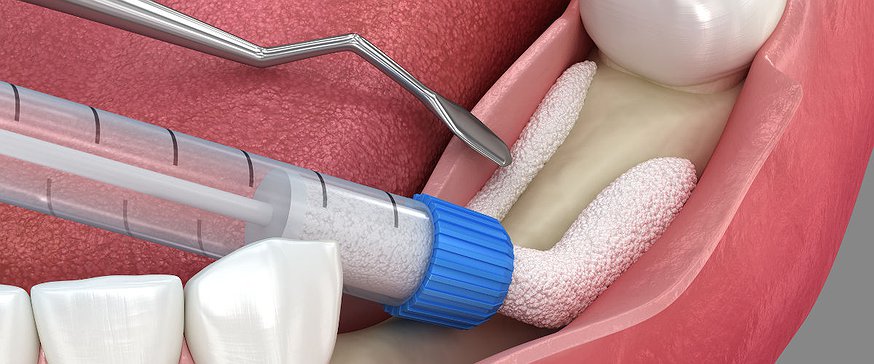
Bone grafting may be recommended when the jawbone is too thin, too low, or too uneven to hold an implant properly.
This can sound worrying, but grafting is a common part of implant planning. It is not needed in every case. When it is needed, its purpose is to improve the foundation for the implant.
Bone grafting may be discussed if:
- the tooth has been missing for a long time
- the extraction socket lost bone
- the ridge is too narrow
- gum disease affected the area
- infection damaged the bone before extraction
- the missing tooth is in the front of the smile
- the upper back tooth area is close to the sinus
- several teeth are missing in the same area
There are different types of grafting. Some are small and done around the time of extraction. Others need more healing time before the implant can be placed.
| Situation | Possible treatment path |
|---|---|
| Tooth removed recently and bone is stable | Implant may be placed after healing |
| Tooth being extracted with future implant planned | Socket preservation may be considered |
| Ridge is too narrow | Bone grafting may be needed |
| Upper molar area has limited bone height | Sinus-related planning may be required |
| Front tooth area has gum collapse | Bone and soft tissue shape need careful review |
| Several teeth are missing | Implant-supported bridge or denture may be discussed |
Bone grafting can add time to treatment, but it may also prevent compromise. An implant needs stable support. Placing it where the bone is not ready can create problems later.
Who May Be a Suitable Candidate for Dental Implants?
A suitable implant candidate needs more than a missing tooth. The mouth has to be healthy enough to support surgery, healing, and long-term function.
A patient may be suitable for dental implants if they have:
- one or more missing teeth
- enough jawbone to support an implant
- healthy or treatable gums
- good oral hygiene habits
- a stable bite
- controlled medical conditions
- realistic expectations
- willingness to attend follow-up and maintenance visits
Some patients need preparation before implant placement. This may include gum treatment, bone grafting, extraction of a failing tooth, treatment of infection, or a nightguard if grinding is a concern.
Other factors need extra care:
| Factor | Why it matters |
|---|---|
| Smoking | Can affect healing and gum health |
| Uncontrolled diabetes | May increase healing and infection risks |
| Active gum disease | Can damage bone support |
| Heavy grinding | Can overload implants |
| Poor cleaning habits | Can lead to inflammation around the implant |
| Certain medications | May affect bone healing or surgical planning |
| Severe bone loss | May require grafting or a different approach |
A patient who is not ready for implants today may still become a candidate after the right preparation.
What Happens During an Implant Assessment
An implant assessment is a planning visit. The dentist is not only checking whether there is a gap. They are checking whether an implant can be placed safely, restored properly, and maintained over time.
The assessment may include:
- checking the missing tooth area
- reviewing the gums
- measuring available space
- looking at the bite
- assessing neighbouring teeth
- discussing medical history
- reviewing medications
- asking about smoking or grinding
- taking X-rays or 3D imaging
- explaining possible treatment stages
For patients in Maple, Vaughan, Woodbridge, Kleinburg, Concord, and nearby areas, it is also useful to understand that implant treatment usually takes more than one visit. There may be a consultation, imaging, extraction, grafting, implant placement, healing checks, crown placement, and maintenance appointments.
Maple Dental Health is located in Maple, not Woodbridge. Patients from surrounding communities may still choose to visit the Maple clinic for implant assessment and treatment planning.
How to Keep Bone Healthy Around an Implant
A dental implant can protect bone only if the tissues around it stay healthy. The crown itself cannot decay, but the gum and bone around the implant can still become inflamed.
This is where daily habits matter.
Implant care usually includes brushing, cleaning between the teeth, regular hygiene visits, and periodic monitoring. If a patient grinds or clenches, a nightguard may be recommended. If there are medical conditions such as diabetes, keeping them controlled can also support healing and long-term stability.
| Long-term habit | Why it helps |
|---|---|
| Brushing twice daily | Reduces plaque around the implant crown |
| Cleaning between teeth | Protects the gum and bone around the implant |
| Hygiene appointments | Helps detect inflammation early |
| Bite checks | Reduces overload risk |
| Nightguard if needed | Protects the implant from grinding forces |
| Not smoking | Supports gum and bone health |
| Reporting looseness or bleeding early | Allows faster treatment if something changes |
Implants are strong, but they are not “set and forget” dentistry. They need care, just like natural teeth.
Jawbone Preservation Comparison Chart
| Treatment choice after tooth loss | Bone preservation potential | Main advantage | Main limitation |
|---|---|---|---|
| Leaving the gap untreated | Low | No immediate procedure | Bone shrinkage and tooth movement may continue |
| Removable denture | Low to moderate | Replaces appearance and some chewing ability | Does not replace the root |
| Traditional bridge | Moderate for chewing, low for local bone support | Fixed option, useful in selected cases | Bone under the missing tooth may still shrink |
| Dental implant with crown | High when suitable | Replaces both root and visible tooth | Needs enough bone and healthy gums |
| Bone graft followed by implant | High when properly planned | Can rebuild support for implant placement | Adds healing time and cost |
| Implant-supported denture | Moderate to high | More stable than a regular denture | Requires surgery and maintenance |
A Clinical Note for Patients in Maple and Vaughan
At Maple Dental Health, implant treatment planning is approached as a long-term oral health decision, not simply a cosmetic replacement. The team looks at the missing tooth area, the gum condition, bone volume, bite pressure, and the health of neighbouring teeth before recommending a treatment path.
This is especially important for patients who have had a missing tooth for several months or years. In those cases, the question is not only “Can I get an implant?” but also “Is there enough healthy bone to support it predictably?” A careful assessment helps determine whether implant placement, bone grafting, a bridge, or another solution is the most appropriate option.
Frequently Asked Questions
Can dental implants prevent jawbone shrinkage?
Dental implants can help reduce jawbone shrinkage in the area where the tooth was lost. They do this by replacing the missing root and transferring chewing pressure into the jawbone. This helps keep the bone active. They cannot stop every natural change in the jaw, but they are one of the strongest options for preserving bone after tooth loss.
Why does the jawbone shrink after a tooth is removed?
The jawbone depends on stimulation from tooth roots. When a tooth is removed, the bone in that area no longer receives the same pressure during chewing. The body then begins to remodel the unused bone, which can make the ridge thinner or lower over time.
Do implants rebuild bone that has already disappeared?
No, not by themselves. Implants help maintain bone once they are placed and healed, but they do not automatically restore bone that has already been lost. If the ridge has become too thin or too low, bone grafting may be needed before implant placement.
How soon should I ask about an implant after losing a tooth?
It is best to ask as early as possible, ideally before the tooth is removed or soon after extraction. Early planning gives the dentist more options. Even if an implant is not placed immediately, the dentist can assess whether socket preservation or delayed implant placement may be appropriate.
Is immediate implant placement always better?
No. Immediate implant placement can work well in selected cases, but it is not right for everyone. If there is infection, thin bone, gum recession, or a difficult bite, waiting may be safer. The timing should be based on the condition of the bone and gum, not only on convenience.
What happens if I leave a missing tooth untreated?
The jawbone in that area may shrink. Nearby teeth may shift or lean into the space. The tooth above or below the gap may also move. Over time, this can affect the bite and make future replacement more complicated.
Can a bridge stop jawbone shrinkage?
A traditional bridge can replace the visible missing tooth, but it does not replace the root. Because there is no root-like structure inside the bone, the jawbone under the missing tooth area may continue to shrink.
Can dentures prevent jawbone loss?
Regular dentures do not prevent bone loss in the same way implants can. They sit on the gum rather than inside the bone. They can restore appearance and some chewing function, but they do not provide root-level stimulation.
Are implant-supported dentures better for the jawbone?
Implant-supported dentures usually provide better stability than regular dentures and can help support the jawbone where implants are placed. They may be a good option for patients missing several or all teeth, depending on bone levels and oral health.
What is bone grafting?
Bone grafting is a procedure used to add or preserve bone in an area where the jawbone is not strong or wide enough for an implant. It may be done after extraction, before implant placement, or sometimes at the same time as implant surgery.
Does everyone need bone grafting before implants?
No. Many patients have enough bone for implant placement without grafting. Others need grafting because the tooth has been missing for a long time, the ridge is narrow, or infection damaged the bone before extraction.
How does the dentist know whether I have enough bone?
The dentist checks the area clinically and reviews imaging. X-rays can show general bone levels, while 3D imaging may be used when more detail is needed. This helps determine whether an implant can be placed safely and whether grafting is required.
Can gum disease affect dental implants?
Yes. Gum disease can damage the tissues that support teeth and implants. If gum disease is active, it usually needs to be treated before implant placement. Healthy gums are important for long-term implant stability.
Can smoking affect implant success?
Yes. Smoking can interfere with healing and increase the risk of gum and bone problems around implants. Patients who smoke may still be assessed for implants, but the risks should be discussed carefully.
Can diabetes affect dental implant treatment?
Diabetes does not automatically prevent implant treatment, but it should be well controlled. Poorly controlled diabetes can slow healing and increase the risk of infection. The dentist may ask about medical history before recommending treatment.
Are dental implants painful?
Implant placement is usually done with local anaesthetic. Most patients expect more discomfort than they actually feel during the procedure. Recovery varies, especially if extraction or bone grafting is done at the same time.
How long does implant treatment take?
The timeline depends on the case. Some patients need only implant placement, healing, and crown placement. Others need extraction, bone grafting, or additional healing time first. Treatment may take several months from start to finish.
Can bone loss happen around an implant later?
Yes. Bone loss can happen around implants if the surrounding tissues become inflamed, if cleaning is poor, if smoking affects healing, or if the bite puts too much pressure on the implant. Regular dental visits help catch these problems early.
Do implants need special care?
They need consistent care rather than complicated care. Brushing, cleaning between teeth, professional hygiene visits, and regular checks are usually enough for many patients. If there is grinding, a nightguard may be recommended.
Can I still get an implant if my tooth has been missing for years?
Possibly. A tooth that has been missing for years may still be replaced with an implant if enough bone remains or if grafting can rebuild support. The only way to know is to have the area assessed.
Will an implant improve facial shape?
An implant can help preserve bone support in the missing tooth area. This may help maintain local structure. However, facial shape is affected by many things, including age, skin, muscles, bite, and the number of missing teeth. Implants should not be viewed as a cosmetic facial treatment on their own.
Is Maple Dental Health located in Woodbridge?
No. Maple Dental Health is located in Maple, Vaughan. Patients from Woodbridge and nearby areas may travel to the clinic, but the office itself is not in Woodbridge.
When should I book a consultation?
A consultation is worth booking when a tooth is missing, when a tooth may need extraction, or when an old bridge or denture is no longer working well. Earlier assessment usually gives the dentist more options for preserving bone and planning treatment properly.