



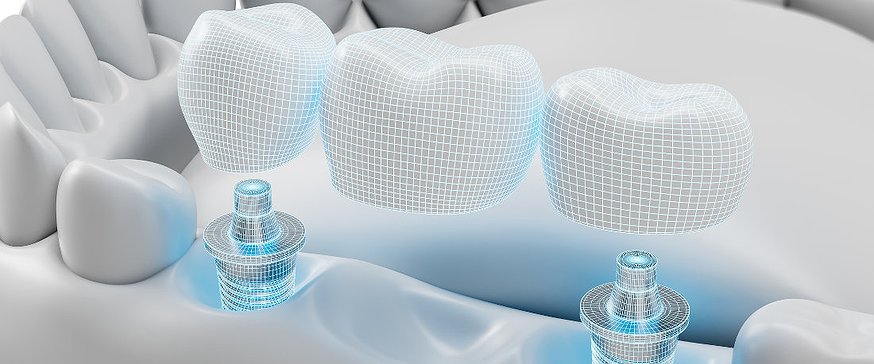
How to Care for Your Dental Implants for a Lifetime
An in-clinic conversation with the Maple Dental Health team
Compiled and edited for patients
If dental implants fail years down the line, it’s rarely because the implant “gave out.” It’s almost always because the tissues around it changed slowly. Good daily cleaning, routine monitoring, and managing bite forces are what protect implants long term. When those things slip, problems tend to show up quietly, not suddenly.
Table of contents
- Why implant care doesn’t end after healing
- How implants behave differently than natural teeth
- Daily care: what patients think vs what matters
- Brushing habits that help more than they harm
- Cleaning between implants and neighbouring teeth
- Rinses, water flossers, and realistic expectations
- Why follow-up visits matter more over time
- X-rays and slow bone changes
- Habits that shorten implant lifespan
- Grinding, clenching, and bite forces
- Smoking, vaping, and tissue response
- Diet, wear, and everyday choices
- Early signs patients often ignore
- Why implants fail years later
- What long-term success actually looks like
- Questions worth asking during maintenance visits
- Extended FAQs
Why implant care doesn’t end after healing
Q: Patients often ask, “Once the implant heals, that’s it, right?”
A: That’s probably the most common assumption we hear. And it’s understandable. Once the crown is in place, there’s no sensitivity, no decay, and chewing feels normal. From a patient’s point of view, the problem feels solved.
What we see clinically is something different. Implants rely completely on the surrounding gum and bone. They don’t have the same biological warning system natural teeth do. So when inflammation starts, patients usually don’t feel it right away. By the time something feels “off,” changes have often been happening for a while.
That’s why implant care is less about the first year and more about what happens quietly over the next ten or twenty.
How implants behave differently than natural teeth
Q: Why do implants need different care than natural teeth?
A: Natural teeth are suspended in bone by a periodontal ligament. That ligament absorbs force and sends signals when something isn’t right. Implants don’t have that buffer. They’re anchored directly to bone.
Here’s how that difference plays out over time:
| Comparison point | Natural teeth | Dental implants |
|---|---|---|
| Shock absorption | Present | Minimal |
| Early response to overload | Often discomfort | Often none |
| Inflammation warning | Earlier | Delayed |
In practice, this means an implant can feel fine even when the surrounding tissue isn’t.
Daily care: what patients think vs what matters
Q: What does “good daily care” actually mean for implants?
A: Most patients are brushing. That’s not usually the issue. The issue is where the brushing happens and what gets missed.
Plaque tends to collect right where the implant crown meets the gum. If that area isn’t cleaned consistently, inflammation builds slowly. The same applies to the spaces between implants and neighbouring teeth. Those areas are easy to rush through or skip entirely.
What matters most isn’t perfection. It’s repetition.
Brushing habits that help more than they harm
Q: Can brushing too hard cause problems around implants?
A: Yes, and we see it fairly often. Patients scrub harder because they want to “keep it clean.” Over time, that can thin the gum tissue and make the area harder to maintain.
A soft brush, angled gently toward the gumline, does a better job than force ever will. Electric toothbrushes can help some patients slow down and ease up, but technique still matters more than the device.
Cleaning between implants and neighbouring teeth
Q: Is floss enough around implants?
A: Sometimes. Sometimes not. It depends on spacing, crown shape, and how comfortable the patient is using it.
Some patients do better with interdental brushes. Others use implant-specific cleaning aids. The key is that the tool fits and actually gets used. If cleaning feels awkward or ineffective, that usually means something needs adjusting.
Avoiding the area entirely is where problems start.
Rinses, water flossers, and realistic expectations
Q: Do rinses or water flossers replace flossing?
A: No. They help, but they don’t replace mechanical cleaning.
Antibacterial rinses can be useful for patients with a history of gum disease. Water flossers are helpful around implant bridges or food-trapping areas. They’re best thought of as support tools, not shortcuts.
Why follow-up visits matter more over time
Q: If an implant feels fine, why keep checking it?
A: Because early implant problems are often painless. Regular visits let us see changes patients can’t feel — mild inflammation, plaque buildup in difficult areas, or bite changes that increase stress on implants.
Professional cleanings also use implant-safe instruments designed to protect implant surfaces. That matters more over time than most people realise.
X-rays and slow bone changes
Q: Why are X-rays still needed years later?
A: Bone around implants changes slowly. X-rays let us track trends, not just snapshots. Small changes picked up early are much easier to manage than advanced bone loss discovered late.
Habits that shorten implant lifespan
Q: What habits cause the most long-term issues?
A: Using teeth as tools, chewing ice, skipping maintenance visits, and ignoring mild bleeding are common ones. None of these cause immediate failure. Over years, though, they add up.
Grinding, clenching, and bite forces
Q: Why do dentists recommend night guards for implant patients?
A: Implants don’t absorb force the way natural teeth do. Grinding and clenching transfer stress directly to bone. We often see signs like porcelain chipping or crown loosening before patients notice anything themselves.
Smoking, vaping, and tissue response
Q: Does vaping really matter for implants?
A: Nicotine matters. Smoking and vaping both reduce blood flow to the gums and affect bone metabolism. Long-term implant stability is consistently lower in patients who continue nicotine use.
Diet, wear, and everyday choices
Q: Are there foods implant patients should avoid long term?
A: Most foods are fine once healing is complete. Very hard foods and constant snacking increase wear and plaque buildup. Over time, those habits affect gum health more than patients expect.
Early signs patients often ignore
Q: What symptoms shouldn’t be brushed off?
A: Bleeding during brushing, persistent redness, a bad taste near the implant, or subtle bite changes. None of these are dramatic. That’s exactly why they get ignored.
Why implants fail years later
Q: When implants fail late, what’s usually the reason?
A: Almost always maintenance-related.
| Factor | Long-term effect |
|---|---|
| Plaque buildup | Chronic inflammation |
| Smoking | Reduced tissue resilience |
| Bite overload | Progressive bone loss |
| Missed follow-ups | Delayed intervention |
What long-term success actually looks like
Q: What does success mean years down the line?
A: Stable bone, healthy gums, and comfortable function. Implants aren’t maintenance-free, but with consistent care they often last for decades.
Questions worth asking during maintenance visits
- Are my gums around the implants healthy right now?
- Have bone levels changed since my last X-ray?
- Is my bite placing extra stress on the implants?
- Should I change how I clean at home?
- How often should I be monitored going forward?
Frequently Asked Questions
Can dental implants really last a lifetime?
Many do, especially when hygiene and follow-up are consistent.
Do implants get cavities?
No, but the surrounding tissues can become inflamed or infected.
Is bleeding around an implant normal?
Occasional irritation can happen. Persistent bleeding should be checked.
Can implants fail years later?
Yes. Late complications usually develop slowly.
Do I need special toothpaste?
Most non-abrasive toothpastes are fine unless advised otherwise.
Are water flossers safe for implants?
Yes, when used properly, but they don’t replace brushing or flossing.
How often should implants be professionally cleaned?
Most patients every six months; some need more frequent care.
Can gum disease affect implants?
Yes. Peri-implant disease can compromise stability if untreated.
Should implants be checked even if they feel fine?
Yes. Early problems are often painless.